
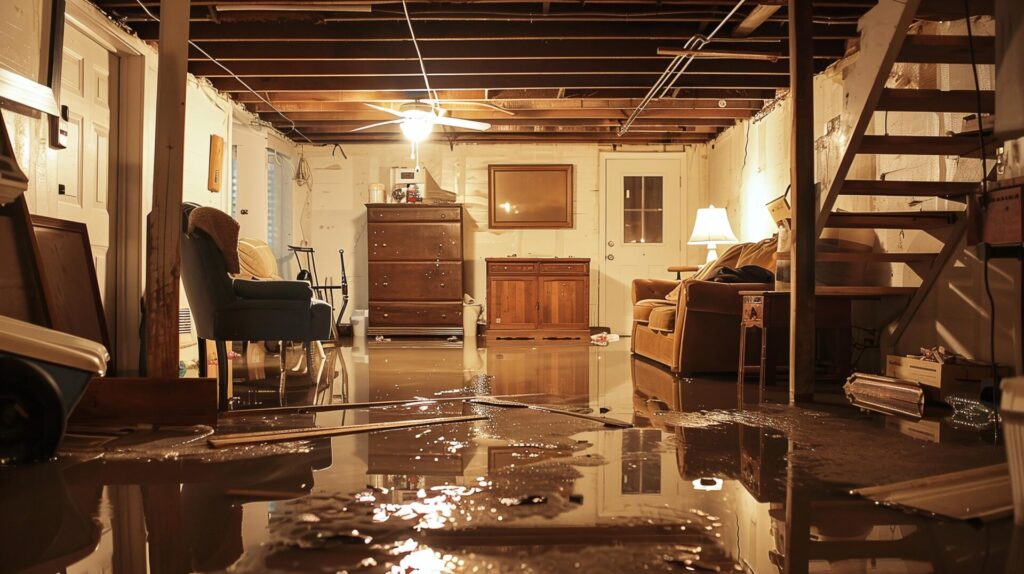
Repairing Flooded Basements starts with swift action. After a heavy rainstorm, you discover your basement is flooded, leaving you overwhelmed. It’s vital to tackle this situation methodically to prevent further damage and ensure safety. From evaluating the extent of the damage to implementing effective drainage solutions, there are key steps to follow. Understanding each aspect of the repair process will help you restore your basement effectively and prevent future issues. Let’s explore these essential tips.
Repairing Flooded Basements: Key Takeaways
- Document all damage with photos for insurance claims and assess structural integrity before initiating repairs.
- Remove standing water using a sump pump or wet/dry vacuum, ensuring electricity is turned off beforehand.
- Clean and disinfect all surfaces with a bleach solution to prevent mold growth and ensure thorough drying.
- Inspect and repair any structural damage, consulting professionals for significant issues like weakened support beams.
- Implement mold prevention strategies, such as using dehumidifiers and ensuring proper drainage systems are in place.
Assess the Damage
When you face a flooded basement, the first step is to assess the damage thoroughly. Start by documenting everything with photographs or videos; this will aid in your damage assessment and support any claims you might make with your flood insurance provider.
Look for signs of structural damage, such as cracks in the walls or weakened support beams. Check personal belongings and furniture for water damage, noting what can be salvaged and what needs replacing.
If you have electrical systems in the basement, evaluate them carefully—don’t take any risks without professional help. Understanding the extent of the damage is vital for planning repairs and ensuring your safety.
Additionally, having a clear record will streamline the process when dealing with your flood insurance claim. By taking these steps, you assure that you’re prepared to move forward effectively and recover from this setback.
Ensure Safety First
Before starting any repairs, ensure your safety by assessing potential electrical hazards.
Always wear protective gear, including gloves and boots, to shield yourself from contaminants.
Finally, ventilate the area to prevent the buildup of harmful gases and improve air quality.
Assess Electrical Hazards
As you begin evaluating electrical hazards in a flooded basement, it’s crucial to prioritize safety to prevent serious injuries or fatalities.
Start by turning off the main power supply to avoid any risk of electrocution. Inspect all circuits and outlets for damage, and confirm that no wires are submerged in water.
If you notice any frayed wiring or exposed circuits, don’t attempt repairs yourself—call a licensed electrician. Use a moisture meter to check for hidden dampness that could lead to electrical failures.
Remember, electrical safety is paramount; never underestimate the dangers posed by water and electricity.
Once you’ve completed your circuit inspection, document any issues for professional assistance to ensure a thorough recovery process.
Wear Protective Gear
Donning protective gear is vital for anyone working in a flooded basement. Safety precautions should be your top priority, as contaminated water can pose serious health risks.
Start with waterproof boots to keep your feet dry and protected from sharp objects. Next, wear gloves made from heavy-duty materials to prevent skin contact with hazardous substances. A mask is important to avoid inhaling mold spores or airborne toxins, while goggles shield your eyes from debris and chemical splashes.
Consider a hard hat if there’s a risk of falling objects. Always verify your protective equipment fits properly and is in good condition.
Ventilate the Area
Proper ventilation is essential when dealing with a flooded basement, and it should be one of your first actions.
Ensuring good air quality helps dry out the space and reduces the risk of mold growth.
Here are three effective ventilation techniques you can use:
- Open Windows and Doors: Allow fresh air to circulate, helping to lower humidity levels.
- Use Fans: Position fans to push moist air outside and draw in drier air, accelerating the drying process.
- Dehumidifiers: These devices help remove excess moisture from the air, maintaining a healthier environment.
Remove Standing Water
When water accumulates in your basement, removing standing water quickly becomes critical to prevent further damage and mold growth. Start by evaluating the depth of the water. For shallow pools, a wet/dry vacuum can be effective. For larger amounts, consider using sump pump options. A submersible sump pump can efficiently remove water, especially if you have a significant flood. Confirm your pump is properly placed and connected to a discharge hose that leads away from your foundation.
If you don’t have a sump pump, manual methods like buckets can work, but be prepared for a labor-intensive process. You can also explore other water removal techniques, such as using a garden hose to siphon water.
Always prioritize safety: turn off electricity in affected areas before starting any removal efforts. Once you’re on top of the standing water, you’ll be better equipped to address the next steps in your basement repair journey.
Dry Out the Area
After you’ve removed the standing water, it’s essential to dry out the area effectively.
Increase air circulation by using fans and dehumidifiers to expedite the drying process.
This step helps prevent mold growth and further damage to your basement.
Remove Standing Water
Removing standing water is essential for preventing further damage and promoting effective drying in your flooded basement.
To tackle this task efficiently, consider these steps for standing water removal:
- Assess the Water Level: Determine how deep the water is to choose the right tools for removal.
- Sump Pump Installation: If you don’t have one, installing a sump pump can greatly speed up the process. It’s designed to remove excess water effectively.
- Use a Wet/Dry Vacuum: For smaller amounts of water, a wet/dry vacuum can help you get the last remnants out, ensuring no water is left behind.
Increase Air Circulation
To dry out your flooded basement effectively, you’ll need to kick up air circulation.
Start by employing various airflow techniques, such as opening windows and doors to create cross-ventilation. If the weather permits, use fans to enhance airflow, directing them towards damp areas to promote evaporation.
Placing a dehumidifier in the space can greatly aid in moisture removal, maximizing your efforts. The dehumidifier benefits include reducing humidity levels, preventing mold growth, and accelerating the drying process.
For best results, run the dehumidifier continuously until the area is completely dry.
Combining these methods ensures your basement dries efficiently, safeguarding your home from further water damage and creating a safer, more comfortable environment for you and your family.
Clean and Disinfect Surfaces
Cleaning and disinfecting surfaces in a flooded basement is vital for preventing mold growth and ensuring a safe environment.
After water removal, you’ll need to act quickly. Here are three important steps to follow:
- Surface Cleaning: Start by removing debris and dirt from all surfaces using a broom or vacuum.
Make sure you wear protective gear to avoid exposure to contaminants.
- Disinfection Methods: Use a solution of water and bleach (1 cup of bleach per gallon of water) or a commercial disinfectant.
Apply it generously to all surfaces, including walls, floors, and furniture.
- Thorough Drying: After cleaning, dry surfaces completely to inhibit mold growth.
Use fans or dehumidifiers to help speed up the process.
Inspect for Structural Damage
After cleaning and disinfecting, you need to inspect for structural damage.
Start by checking for foundation cracks, as they can indicate serious issues.
Next, assess wall stability and inspect support beams to ensure your basement remains safe and sound.
Check Foundation Cracks
When evaluating the aftermath of flooding, checking for foundation cracks is essential, as these fractures can indicate significant structural damage.
A thorough foundation inspection will help you identify potential issues and take appropriate action. Here are three key steps to follow:
- Look for visible cracks: Examine your foundation walls for any cracks; even small ones can signal underlying issues.
- Measure crack width: Use a ruler to measure the width of any cracks; wider cracks may require professional assessment.
- Assess water intrusion: Check if water is seeping through cracks; if so, you’ll need to contemplate crack sealing to prevent further damage.
Addressing these cracks promptly can protect your home’s integrity and ensure a safe living environment.
Assess Wall Stability
While you may have addressed foundation cracks, it’s equally important to assess your walls for stability and potential structural damage following a flood.
Begin with a thorough structural inspection of your walls. Look for signs of bowing, cracking, or bulging, which could indicate compromised wall integrity. Pay attention to moisture stains or mold, as these can signal underlying issues.
Use a level to check for plumbness, ensuring that your walls remain vertical and stable. If you notice any significant damage, don’t hesitate to consult a professional. They can provide insights on necessary repairs and help restore your home’s safety.
Inspect Support Beams
Support beams play an essential role in maintaining the structural integrity of your basement, so it’s important to inspect them for any signs of damage after a flood.
Follow these steps to confirm your support beams are safe:
- Check for Cracks: Look for any visible cracks or splintering in the beams. This can indicate weakened support.
- Assess Beam Types: Identify the types of support beams present—wood, steel, or concrete—as each type may require different reinforcement techniques.
- Evaluate Moisture Damage: Inspect for signs of water damage, such as rot in wooden beams or rust in steel ones.
If you notice significant damage, consider beam reinforcement options or consult a structural engineer to confirm your basement remains safe and secure.
Repair Walls and Floors
After evaluating the extent of the water damage, you can begin repairing the walls and floors of your flooded basement.
Start with wall reinforcement techniques, ensuring your walls can withstand future moisture. Inspect for cracks and apply hydraulic cement to seal them. Once repaired, consider adding a waterproofing membrane for added protection.
Next, focus on floor restoration methods. If your flooring is damaged beyond repair, you might need to replace it entirely.
For concrete floors, clean and dry the surface, then apply a sealant to prevent moisture seepage. If you have wood floors, assess the damage; you may need to replace warped or rotting boards.
Throughout the process, always prioritize safety by wearing protective gear.
Address Mold Prevention
To effectively prevent mold growth in your basement, it’s essential to control moisture levels and ensure proper ventilation. Mold thrives in damp environments, so taking proactive steps is vital for your health and safety.
Here are some effective strategies to implement:
- Dehumidify: Use a dehumidifier to maintain humidity levels below 60%, greatly reducing mold growth risk.
- Ventilate: Ensure your basement has adequate ventilation. Open windows or install vents to promote air circulation.
- Seal Cracks: Inspect and seal any cracks in walls or floors to prevent water seepage and maintain moisture control.
Install Proper Drainage Solutions
Controlling moisture isn’t just about preventing mold; it also involves installing proper drainage solutions to manage water effectively around your home.
Start with drainage installation, which includes gutters and downspouts to direct rainwater away from your foundation. Make sure your gutters are clear and functioning to prevent overflow.
Next, focus on basement grading. Your yard should slope away from your home to encourage water runoff. If your yard is flat or slopes toward your foundation, consider regrading the landscape for best drainage.
Additionally, installing a French drain can help redirect water that accumulates around the basement. This system captures excess water and channels it away, preventing flooding.
Monitor for Future Issues
While you’ve taken steps to address flooding issues, it’s essential to monitor for future problems that could arise.
Regular monitoring can save you from costly repairs down the line. Here are three key areas to focus on:
- Flood Prediction: Keep an eye on local weather forecasts and flood alerts. Being proactive can help you prepare your basement for potential threats.
- Drainage Maintenance: Regularly inspect and clean your drainage systems. Clogs or blockages can lead to backups during heavy rains, increasing the risk of flooding.
- Foundation Integrity: Look for cracks or signs of wear in your foundation. These can worsen over time and may allow water infiltration.
Summary
In the aftermath of a flooded basement, taking swift action is essential to restore your space and protect your home. By following these ten tips, you can turn the tide on potential damage and safeguard against future floods. Remember, just like a sturdy dam holds back water, your proactive measures will keep your home safe and sound. Don’t hesitate to call in professionals for significant repairs, ensuring your basement remains a secure refuge for years to come.