
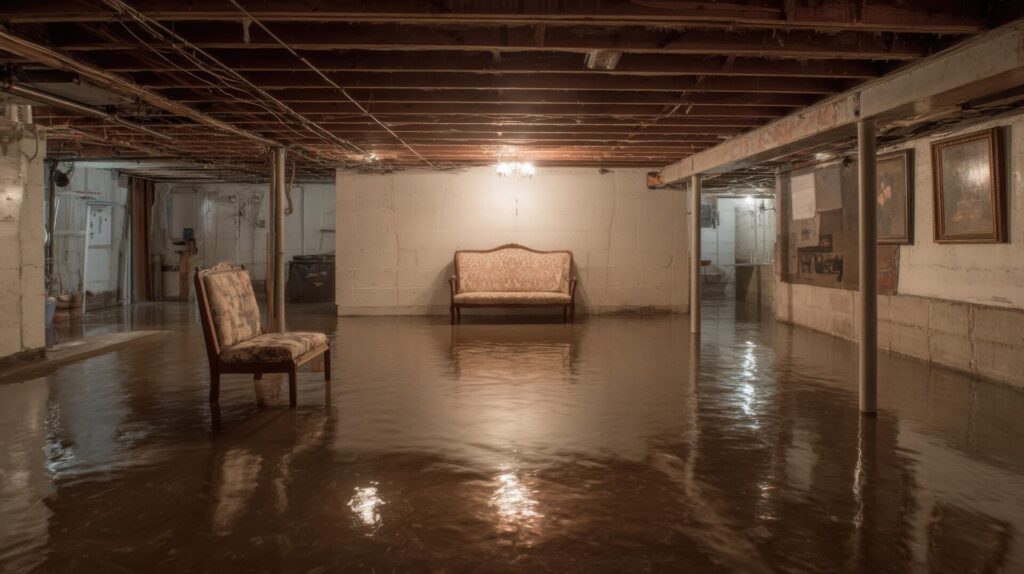
If you find yourself facing a flooded basement, knowing the right techniques can make all the difference in restoring your space effectively. From efficient water removal to ensuring a dry environment, each step is essential. Let’s explore three practical DIY methods that can help you tackle this challenge and safeguard your home against future flooding.
Key Takeaways
- Use sump pumps for rapid water removal, ensuring large volumes are efficiently extracted from the flooded basement.
- Employ wet/dry vacuums to tackle smaller amounts of water, allowing for a thorough clean-up process.
- Maximize air circulation by opening windows and using fans to help dry out the basement environment.
- Treat surfaces with a mixture of water and vinegar to inhibit mold growth after drying is complete.
- Store belongings in waterproof bins and regularly inspect for moisture to prevent future flooding issues.
Assessing the Damage and Safety Precautions
When you step into a flooded basement, it’s essential to assess the damage before diving into restoration efforts. Start with a thorough damage evaluation; look for water stains, warped materials, and any electrical hazards. You need to document everything, as this will help with insurance claims later.
Before proceeding, don your safety gear—rubber boots, gloves, and a mask. Standing water can harbor bacteria and mold, so protecting yourself is vital.
Check for structural integrity; if you notice sagging ceilings or walls, it’s best to consult a professional.
Once you’ve assessed the situation and taken safety precautions, you’ll feel more prepared to tackle the restoration process. Remember, your comfort and safety are our top priority, so take your time and don’t rush through the evaluation.
You’re part of a community that understands this struggle, and together, you can find effective solutions.
Effective Water Removal Methods
As you begin the water removal process, using the right tools can make all the difference in restoring your basement efficiently. Sump pumps are essential for effective water extraction, quickly removing large volumes of water. If the flooding is minimal, a wet/dry vacuum can be a handy tool to have.
| Tool Type | Purpose |
|---|---|
| Sump Pump | Removes large amounts of water |
| Wet/Dry Vacuum | Extracts smaller water volumes |
| Towels and Mops | For final clean-up |
| Hose | Directs water away from the home |
| Fans | Helps with drying |
After selecting your tools, start by clearing any debris and positioning the sump pump in the lowest area. Confirm you follow safety precautions while working, and remember to check your pump’s functionality regularly. You’re not alone in this; with the right methods, you can restore your space!
Drying and Restoring the Basement Environment
After you’ve effectively removed the water, the next step is to focus on drying and restoring the basement environment.
Begin by maximizing air circulation. Open windows and doors, and use fans to promote airflow. If you have a dehumidifier, set it up to help pull moisture from the air.
Next, inspect all surfaces for dampness. Pay close attention to corners, walls, and flooring. Use a wet/dry vacuum for any lingering moisture.
To prevent mold, treat affected areas with a mixture of water and vinegar or a commercial mold inhibitor. This step is essential for maintaining a healthy environment.
Lastly, consider using waterproof storage bins for your belongings to prevent future damage.
Review
In the aftermath of a flooded basement, think of your space as a phoenix rising from the ashes. By swiftly removing water with a sump pump and wet/dry vacuums, then fostering air circulation with fans and dehumidifiers, you can restore your basement to its former glory. Don’t forget to treat surfaces with a vinegar solution to keep mold at bay. With these practical techniques, your basement can become a safe, dry haven once more.