
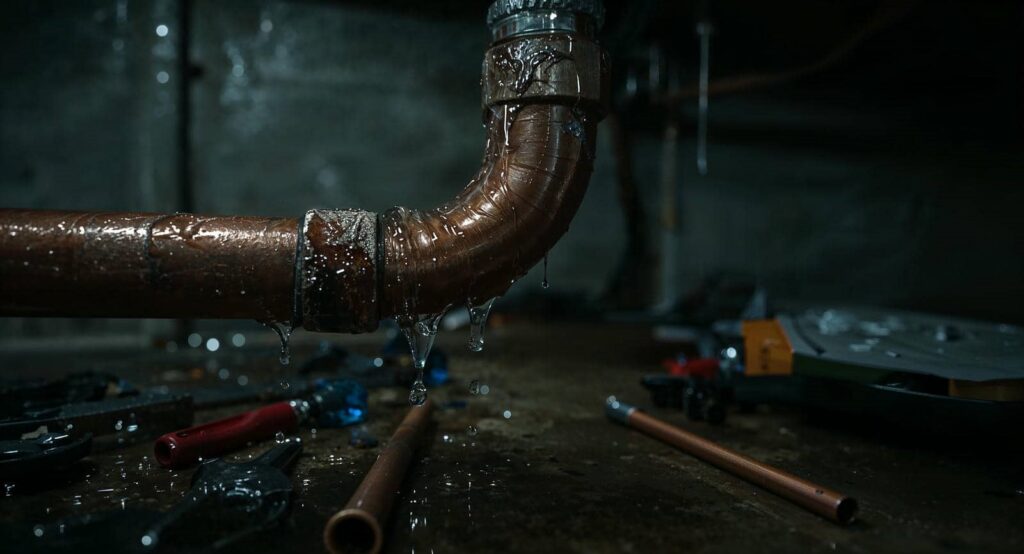
When a plumbing mishap occurs, it can feel like a minor flood has taken over your home. You need to act swiftly to minimize damage and restore order. By following a series of effective flood cleanup techniques, you can tackle the aftermath of burst pipes efficiently. Let’s explore the immediate steps you should take to safeguard your property and ensure a thorough restoration process. Your next move could make all the difference.
Key Takeaways
- Shut off the main water supply immediately to prevent further flooding and assess the affected area for damages.
- Use a wet/dry vacuum to efficiently remove standing water, followed by absorbent materials for residual moisture.
- Set up dehumidifiers and fans to enhance airflow and reduce humidity, accelerating the drying process.
- Check for hidden moisture under furniture and in other concealed spots to ensure thorough drying and prevent mold growth.
- Document all damage with photos for insurance claims and consider professional help if mold or extensive damage is present.
Immediate Steps After a Burst Pipe
When a pipe bursts, taking immediate action is essential to minimize water damage. First, shut off the main water supply to stop the flow.
Then, perform an immediate assessment of the affected area. Check for any electrical hazards, and if necessary, turn off the electricity to that section of your home.
Next, contact your emergency contacts, such as a plumber or a water damage restoration service, to get professional help. Document the damage with photos for insurance purposes.
If it’s safe, begin moving furniture and items away from the water.
Safe Ways to Remove Standing Water
To effectively remove standing water, start by using a wet/dry vacuum to suck up as much water as possible.
After that, employ absorbent materials like towels or mops to soak up any remaining moisture.
These methods help prevent further damage and mold growth in your home.
Utilize Wet/Dry Vacuum
Start by grabbing a wet/dry vacuum, your best ally for removing standing water after a flood. This tool excels in wet/dry usage, making it perfect for tackling the aftermath of burst pipes.
Begin by ensuring your vacuum’s settings are appropriate for water removal. Attach the correct hose and nozzle, then slowly move the vacuum through the affected areas, starting from the highest point of standing water and working downwards.
After each use, don’t forget vacuum maintenance; empty the tank and clean the filters to keep it in top shape for future emergencies.
Employ Absorbent Materials
After using a wet/dry vacuum, absorbent materials can further assist in removing any remaining moisture. You can start by placing towels or rags in areas where water has pooled. These materials help with water retention, soaking up as much liquid as possible.
For larger areas, consider using specialized absorbent pads designed for flood situations; they’re more effective at drawing moisture from surfaces.
Once the absorbent materials are saturated, be sure to replace them with fresh ones to maximize efficiency. Don’t forget to check hidden spots like under furniture or behind appliances, as moisture can linger there.
Effective Methods for Thoroughly Drying Water-Damaged Areas
When water damage strikes, promptly drying the affected areas is essential to prevent mold growth and further structural issues.
Here are effective methods you can utilize:
- Dehumidifier Use: Set up a dehumidifier in the impacted space to remove excess moisture from the air.
- Airflow Improvement: Open windows and doors to enhance ventilation, allowing fresh air to circulate.
- Fans: Use high-powered fans to speed up the drying process, directing airflow across wet surfaces.
- Heating: Increase the temperature in the area, as warm air holds more moisture, facilitating evaporation.
Essential Tools for Cleaning Up After Burst Pipes
Cleaning up after burst pipes requires specific tools to tackle water damage effectively.
First, invest in a wet/dry vacuum, essential for removing standing water and debris. You’ll also need heavy-duty fans and dehumidifiers to promote airflow and speed up drying, ensuring flood safety in your home.
For smaller areas, mop and bucket combos work wonders for residual moisture.
Don’t forget protective gear like gloves, masks, and rubber boots; your safety is paramount.
Additionally, use moisture meters to check for lingering dampness in walls and floors.
Finally, keep disinfectants and cleaning solutions on hand to sanitize affected areas, preventing mold growth.
With the right cleanup equipment, you can restore your space and feel confident in your efforts.
When to Call in Professional Flood Cleanup Services?
How do you know when it’s time to call in professional flood cleanup services? Here are four key signs to look for:
- Extensive Damage: If water damage covers a large area, DIY methods may not suffice.
- Mold Growth: If you spot mold, it’s vital to act quickly to avoid health risks.
- Insurance Claims: If you’re filing an insurance claim, professionals can help document damage properly.
- Plumbing Inspections: If you suspect ongoing plumbing issues, experts can identify the source and prevent future problems.
Recognizing these signs ensures you address the situation promptly.
Don’t hesitate to reach out for professional help; it can save you both time and money in the long run.
Preventing Future Burst Pipes
To prevent future burst pipes, it’s essential to take proactive measures, especially during colder months.
Start by properly insulating your pipes, particularly those in unheated areas like basements and attics. Pipe insulation helps maintain a stable temperature, reducing the risk of freezing.
Additionally, make sure your home’s temperature regulation system is functioning effectively; this includes checking your thermostat and sealing any drafts around windows and doors.
During extreme cold, let faucets drip slightly to relieve pressure.
Regularly inspect your plumbing for signs of wear or leaks, addressing issues promptly.
Understanding the Impact of Burst Pipes on Your Home
Even with preventative measures in place, burst pipes can still occur, leading to considerable damage in your home. Understanding the impact helps you act swiftly and minimize water damage.
Here are key effects to take into account:
- Structural Damage: Water can weaken walls and foundations, leading to costly repairs.
- Mold Growth: Moisture promotes mold, which can affect air quality and health.
- Electrical Hazards: Water exposure can damage wiring, creating a fire risk.
- Increased Costs: Repairing burst pipes and addressing water damage can strain your budget.
Investing in proper pipe insulation can greatly reduce the likelihood of future issues.
Frequently Asked Questions
How Can I Identify a Burst Pipe in My Home?
To identify a burst pipe, check for unusual water pressure drops, listen for hissing sounds, and look for damp spots or water stains on walls and ceilings. Leak detection tools can help pinpoint the issue.
What Are Common Causes of Burst Pipes?
Frozen pipes, pressure buildup, aging infrastructure, and temperature fluctuations are common causes of burst pipes. You can prevent these issues by insulating pipes, regulating pressure, and maintaining your plumbing system to ensure a safe home.
How Does Homeowners Insurance Cover Flood Damage?
Homeowners insurance typically doesn’t cover flood damage; you’ll need flood insurance for that. Check your policy’s coverage limits, as they determine how much you can claim for repairs and restoration after a flood incident.
Are There DIY Solutions for Minor Pipe Leaks?
Yes, you can tackle minor pipe leaks with DIY solutions. Use leak detection methods to locate the source, then apply temporary repairs like epoxy putty or pipe clamps to prevent further damage until a professional arrives.
What Health Risks Are Associated With Water Damage?
Water damage can lead to mold growth, which greatly impacts air quality. You might experience respiratory issues, allergies, or infections. It’s essential to address water problems promptly to protect your health and home environment.
Recap
In the aftermath of a burst pipe, think of your home as a sponge—soaked and heavy, yet resilient. Just like squeezing out that sponge, effective flood cleanup can restore your space to its former glory. By following the right techniques, you can minimize damage and prevent mold growth. Remember, staying proactive protects your investment and keeps your home a safe haven for years to come. Don’t let a burst pipe dampen your spirits; tackle it head-on!