
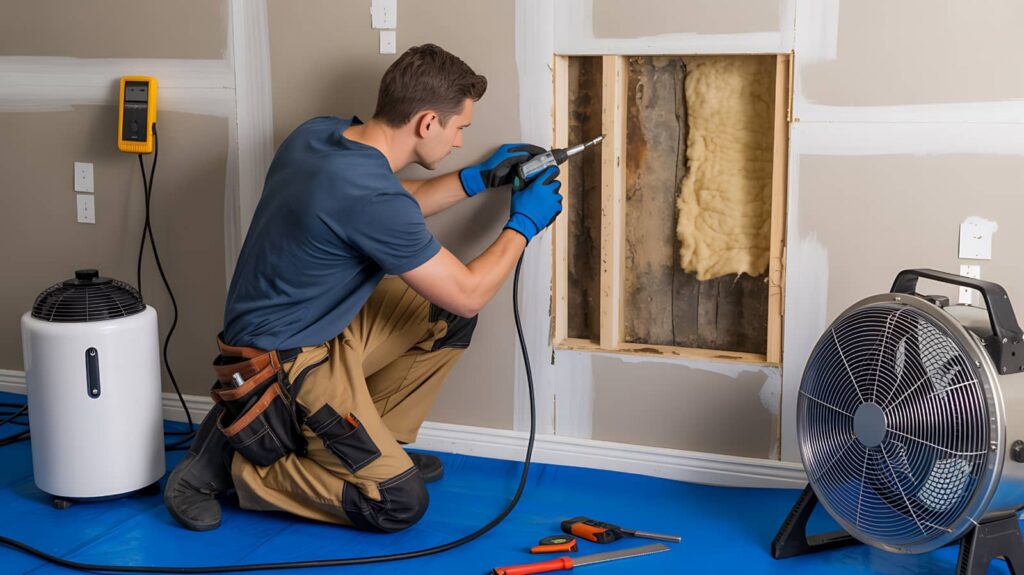
After a pipe burst, moisture can spread through drywall like ink through paper, often reaching areas you can’t see within hours. Structural drying experts help you stop that spread. They inspect the building, map moisture, and measure humidity to define the damage accurately. Then they set controlled drying conditions with specialized equipment and track results until materials return to target levels. What they find behind walls often determines whether recovery stays simple or becomes far more costly.
Key Takeaways
- Structural drying experts inspect water damage, map wet areas, and detect hidden moisture in walls, floors, and framing using specialized tools.
- They classify affected materials and create a controlled drying plan to protect the structure, contents, and indoor air quality.
- They set up air movers, dehumidifiers, heat, and filtration equipment to accelerate evaporation and remove moisture efficiently.
- They monitor moisture, temperature, and humidity daily, adjusting equipment placement to keep drying on track and prevent secondary damage.
- They help prevent mold growth, reduce material loss, and document when materials have reached safe, dry restoration goals.
What Structural Drying Experts Do
Structural drying experts assess moisture intrusion, map the wet area, and remove water from building materials before secondary damage sets in. They use meters, thermal imaging, and psychrometric readings so you understand exactly where water damage has spread and how deeply materials are affected.
You benefit from a controlled drying plan that targets structure, contents, and air. Experts isolate impacted zones, extract standing water, and position air movers and dehumidifiers for calculated evaporation.
They monitor temperature, humidity, and moisture content, then adjust equipment to keep drying efficient and material-safe. You’re part of a process grounded in standards, not guesswork.
When to Call After Water Damage
When should you call after water damage? Call a structural drying expert immediately after you stop the source, secure electricity if needed, and confirm the area is safe to enter.
Fast action limits migration, reduces material deterioration, and supports cleaner insurance claims documentation. You’re protecting your home and your community standard when you respond without delay.
You should also call when damage seems minor but affects drywall, flooring, insulation, subfloors, or framing.
Hidden moisture can persist behind finishes and continue degrading assemblies. Contact professionals after pipe leaks, appliance overflows, storm intrusion, sewage backups, or sprinkler discharge.
If water sat longer than a few hours, don’t wait. Prompt scheduling helps you stay aligned with best practices, preserve salvageable materials, and reduce disruption for everyone who depends on the space daily.
How Experts Assess Water Damage
You need to understand how experts assess water damage before drying can start.
They use moisture mapping methods to measure affected materials, evaluate damage severity to set the drying scope, and identify hidden water behind walls, under flooring, and inside cavities.
If you know how these steps work, you can verify that the drying plan matches the actual extent of damage.
Moisture Mapping Methods
A precise moisture map gives technicians a room-by-room, material-by-material view of where water migrated, how deeply it penetrated, and which surfaces still hold elevated moisture. You build that map by combining moisture meters, thermal imaging, hygrometer readings, and detailed notes from each affected area.
You start with a visual survey, then confirm suspected wet zones with noninvasive and penetrating meter readings. Thermal imaging helps you trace temperature anomalies that may indicate hidden moisture, but you always verify images with direct measurements.
You compare affected materials against dry standards from unaffected rooms to establish reliable baselines. As part of the restoration team, you document floor plans, mark boundaries, record readings by material type, and update the map as conditions change. That shared process keeps everyone aligned and the drying plan targeted and efficient.
Damage Severity Evaluation
Because moisture rarely affects every material equally, restoration professionals evaluate damage severity by measuring how far water spread, how long it remained, what category of water was involved, and how each assembly responded. You need this damage assessment to set priorities, protect salvageable materials, and match drying tactics to risk.
During moisture evaluation, experts compare affected materials against known dry standards, inspect swelling, staining, loss of integrity, and document contamination potential.
You’ll see them classify conditions by material porosity, exposure duration, and source cleanliness, then determine whether components can be dried in place or require removal. They also consider occupant safety, microbial risk, and how finishes, insulation, and structural elements interact under wet conditions.
When you understand this process, you’re better equipped to follow the plan and feel confident your property is being restored correctly.
Hidden Water Detection
Surface conditions only show part of the loss, so restoration professionals verify whether water moved into cavities, under finishes, and along structural paths before they finalize a drying plan.
You need hidden water detection because visible staining rarely maps the full extent of water intrusion. Experts use targeted tools and methodical inspection to confirm affected materials, identify leak sources, and protect your property team from missed moisture.
They scan walls, ceilings, and floors with moisture meters and thermal imaging.
They compare wet and dry readings to define migration patterns and material saturation.
They inspect penetrations, base plates, insulation, and subfloors to locate concealed reservoirs.
When you understand this process, you’re part of a restoration approach that values accuracy, accountability, and complete drying, not assumptions or surface-level fixes alone.
How Structural Drying Works
You start structural drying by verifying moisture levels with meters, thermal imaging, and hygrometric readings so you can map the full extent of wet materials.
Then you set drying targets and position air movers, dehumidifiers, and, when needed, heat to control evaporation and humidity.
As you monitor progress, you adjust equipment based on moisture data so you can dry the structure efficiently and prevent secondary damage.
Moisture Detection Methods
Before drying equipment goes to work, technicians verify where water has migrated by using moisture meters, thermal imaging cameras, and hygrometers to measure conditions in materials and the surrounding air.
You rely on these detection tools to identify moisture sources, define affected boundaries, and establish a documented baseline for your drying team.
Moisture meters confirm water content in wood, drywall, and subfloors with pin or noninvasive readings.
Thermal imaging reveals temperature anomalies that suggest hidden dampness behind walls, under flooring, or above ceilings.
Hygrometers track ambient temperature, relative humidity, and dew point, helping you interpret evaporation potential accurately.
When you combine instrument data with visual inspection and material knowledge, you can map wet zones precisely, avoid missed pockets, and support consistent, standards-based decisions.
Drying Equipment Process
Once technicians have mapped the wet areas, they deploy air movers, dehumidifiers, and, when conditions require it, heat and specialized drying systems to drive evaporation, capture water vapor, and restore affected materials to target moisture levels.
You’ll see equipment arranged to create controlled air circulation across wet surfaces, because faster evaporation only works when humidity stays low. That’s where dehumidification techniques matter: refrigerant or desiccant units remove moisture from the air so materials can keep releasing trapped water.
As part of the drying team’s process, you can expect technicians to calculate room volume, material type, temperature, and vapor pressure before setting equipment counts.
They’ll monitor daily, adjust placement, and verify progress with moisture readings, so your property dries evenly, safely, and according to industry standards.
How Hidden Moisture Is Removed
Because water often migrates beyond visible damage, structural drying experts locate and remove hidden moisture by combining moisture mapping, noninvasive meters, thermal imaging, and targeted openings where readings confirm saturation.
You benefit from a disciplined process that identifies moisture sources, verifies migration paths, and protects materials your community depends on.
Inspect assemblies systematically to compare affected and unaffected areas.
Confirm elevated readings before making focused openings in baseboards, drywall, or trim.
Apply drying techniques that address trapped moisture within cavities, subfloors, and layered materials.
This approach lets you remove wet insulation, release vapor barriers when needed, and expose concealed surfaces for controlled drying.
Structural Drying Equipment Explained
Equipment drives structural drying by controlling airflow, temperature, and humidity in a measured sequence. You use specialized machines in coordinated roles so wet materials release moisture efficiently without causing secondary damage.
Air mover functions center on creating high-velocity airflow across surfaces, breaking the saturated boundary layer and accelerating evaporation from carpet, drywall, framing, and subfloors.
You also match dehumidifier types to site conditions. Refrigerant units remove moisture effectively in warmer, humid environments, while desiccant systems perform better in cooler spaces or when you need lower humidity targets.
Heaters may support evaporation when materials and conditions allow, but you apply them carefully to avoid imbalance. Air scrubbers can improve indoor conditions when contamination is present.
With proper equipment selection and placement, you work like the team you trust.
How Experts Track Drying Progress
While drying equipment does the physical work, you confirm progress with instrument readings, material-specific targets, and documented trends. You don’t rely on guesswork; you compare daily data against established drying metrics for each affected material and room condition.
Measure moisture content with meters, probes, and thermo-hygrometers at consistent locations.
Compare readings to unaffected baseline materials and your drying goal for each assembly.
Record changes over time so progress monitoring shows whether conditions are improving, stalling, or requiring adjustment.
You also verify temperature, relative humidity, and grains per pound to evaluate system performance. When numbers plateau, you reposition equipment, modify airflow, or update containment.
That disciplined process keeps your team aligned, supports clear communication, and confirms drying is moving toward documented completion criteria for everyone involved.
How Drying Helps Prevent Mold
Once your readings show how moisture is moving, you use drying to cut off the conditions mold needs to colonize wet materials. You lower water activity by removing bound and free moisture from drywall, framing, insulation, and subfloors before spores can establish mold growth.
That means positioning air movers for directional airflow, controlling temperature, and running dehumidifiers to pull vapor from the air.
You also isolate affected zones, filter airborne particulates, and verify progress with repeat moisture mapping. By drying materials to established targets, you reduce hidden dampness that supports microbial activity behind surfaces.
This disciplined process protects indoor environments, limits material damage, and reduces health risks for occupants and crews.
When you follow these steps, you help everyone involved restore the structure with confidence together.
Frequently Asked Questions
How Long Does Structural Drying Usually Take?
Structural drying usually takes 3 to 5 days, though you’ll see timelines vary with material saturation, airflow, and temperature. You can accelerate results by using proper drying techniques and calibrated drying equipment for consistent moisture removal.
Will My Insurance Cover Structural Drying Services?
Yes, your insurance may cover structural drying services if your insurance policies include water damage remediation. Review exclusions, deductibles, and coverage limits carefully. Contact your adjuster promptly, document all losses, and follow your carrier’s approved mitigation procedures.
Is It Safe to Stay in My Home During Drying?
Yes, you can stay home during drying if technicians confirm safe indoor air quality, stable electrical conditions, and controlled humidity. You should follow moisture detection findings, isolate affected areas, and leave immediately if contaminants or hazards emerge.
Can Structural Drying Save Hardwood Floors and Carpets?
Yes—if you act fast, you can often save them. You’ll improve hardwood preservation and carpet restoration by extracting water, controlling humidity, and verifying moisture readings, so your home recovers safely and your space still feels like yours.
How Much Does Professional Structural Drying Cost?
You’ll typically pay $1,000–$4,000 for professional structural drying, though cost factors like moisture severity, material type, equipment runtime, and labor create pricing variations. To stay aligned with industry standards, you should request detailed moisture mapping.
Recap
Structural drying experts help you stop water damage before it spreads. They inspect materials, map moisture, set drying targets, and adjust equipment until readings return to acceptable levels. If you act quickly, you can reduce structural damage, odor, and mold risk. For example, after a supply-line leak soaked drywall and subflooring in a hallway, a drying team used air movers, dehumidifiers, and daily moisture checks to dry the assembly completely and avoid full material replacement.