
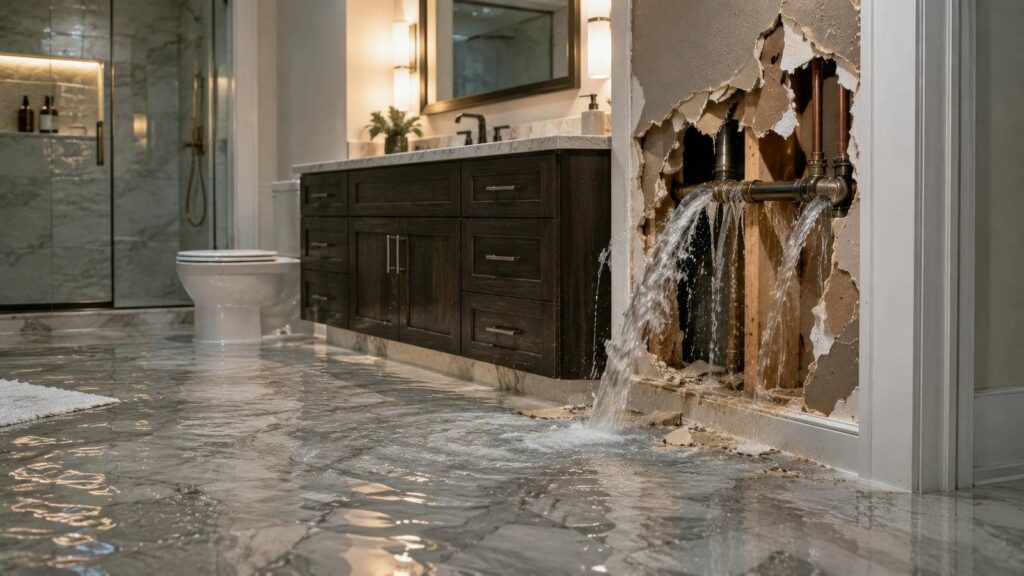
Burst Pipe Cleanup and Repair starts with a fast response, as your immediate actions can greatly reduce the extent of damage. Shut off the water supply first, then assess the affected area. Essential tools, such as wet/dry vacuums and pipe clamps, can help with cleanup and temporary repairs. Understanding how to evaluate water damage and knowing when to handle repairs yourself or call a professional are key to preventing further structural issues and costly repairs.
Key Takeaways
- Immediately shut off the water supply and electricity to prevent further damage and hazards.
- Use wet/dry vacuums and absorbent materials for effective water removal and drying.
- Inspect and document water damage thoroughly for insurance claims and analysis.
- Consider professional repair services for complex issues or extensive damage to ensure safety and efficiency.
- Implement preventive measures, like insulating pipes, to reduce the risk of future bursts.
Immediate Steps to Take After a Pipe Bursts
When a pipe bursts, the first thing you should do is stop the water flow immediately. Locate your main shut-off valve and turn it off to prevent further damage.
Next, conduct a quick assessment of the area to identify the extent of the flooding. Check for any electrical hazards, and if necessary, disconnect power sources to ensure safety during your emergency response.
Use towels or mops to absorb excess water, and ventilate the area by opening windows if possible.
Document the damage for insurance purposes, taking photos if you can.
Essential Tools for Burst Pipe Cleanup and Repair
To effectively manage the cleanup and repair of a burst pipe, having the right tools on hand is vital.
Start with basic cleanup equipment like wet/dry vacuums to remove excess water and absorbent materials to tackle any residual moisture.
You’ll also need pipe repair techniques such as pipe clamps or epoxy putty for temporary fixes.
A pipe cutter or hacksaw helps you remove damaged sections efficiently, while adjustable wrenches and pliers are essential for securing fittings.
Don’t forget safety gear, including gloves and goggles, to protect yourself during the process.
How Do You Assess Water Damage From a Burst Pipe?
After you’ve gathered your tools for cleanup and repair, evaluating water damage from a burst pipe is the next step. Start with a thorough damage inspection to identify affected areas. Use a moisture assessment tool to measure humidity levels in walls and floors.
| Area Affected | Assessment Method | Damage Severity |
|---|---|---|
| Walls | Moisture Meter | Minor/Moderate |
| Floors | Visual Inspection | Severe |
| Ceilings | Thermal Imaging | Minor |
| Furniture | Touch Test | Moderate |
Document your findings and prioritize repairs based on severity. This structured approach helps ensure you address all water damage effectively, fostering a sense of community and support as you work through the recovery process.
Should You DIY or Hire a Pro for Cleanup?
Deciding whether to tackle the cleanup of a burst pipe yourself or hire a professional can greatly impact the recovery process.
DIY techniques might save you money upfront, but consider the tools needed and your experience level.
Professional expertise ensures cleanup efficiency and minimizes safety risks, particularly with electricity and mold.
When weighing cost comparison and time considerations, remember that professionals often complete the job faster, reducing long-term effects like structural damage.
If you choose to DIY, you may face hidden costs or setbacks.
Ultimately, evaluating your skills and the severity of the damage will guide your decision.
Prioritize a thorough, safe cleanup to protect your home and well-being.
Choose the Right Water Damage Restoration Service
When facing water damage from a burst pipe, selecting the right restoration service is key to effective recovery.
Start by researching local restoration companies that specialize in water damage. Look for a service that offers 24/7 availability; emergencies don’t wait.
Check their service reviews to gauge customer satisfaction and reliability. Positive feedback often indicates a trustworthy partner in your recovery process.
Verify that the company is licensed and insured to protect yourself from potential liabilities.
Ask about their restoration methods and equipment to ensure they use industry-standard practices.
Finally, get a detailed estimate before committing, so you know what to expect financially.
Choosing the right service can greatly impact your home’s restoration timeline and overall quality.
Common Mistakes to Avoid During Burst Pipe Cleanup
While managing the aftermath of a burst pipe, it’s essential to avoid common pitfalls that can prolong the cleanup process and exacerbate damage.
One major concern is timing errors; delaying cleanup can worsen drainage issues and lead to mold growth. Always prioritize safety precautions—neglecting them can result in injuries or further damage.
Be mindful of equipment mishaps; using the wrong tools can complicate repairs and hinder progress. Additionally, repair oversights, such as skipping necessary checks, can lead to recurring problems.
Pay attention to your material choices; using subpar materials can undermine long-term effectiveness.
Finally, implement robust mold prevention strategies to safeguard your home’s health.
Avoiding these mistakes will streamline your cleanup efforts and ensure a more effective repair.
How to Prevent Future Burst Pipes in Your Home
After addressing the cleanup from a burst pipe, focusing on prevention is key to avoiding future incidents. Here are three essential strategies:
Pipe Insulation: Proper insulation helps maintain temperature regulation in your pipes, preventing freezing during cold months.
Regular Maintenance: Schedule seasonal checks to monitor water pressure and inspect for wear in materials. This proactive approach can catch issues before they escalate.
Drainage Solutions: Ensure efficient drainage around your home’s foundation to prevent excess moisture buildup, which can strain pipes.
Incorporating these practices into your routine enhances emergency preparedness and minimizes the risk of burst pipes, creating a safer, more comfortable living environment for you and your family.
How to Handle Your Insurance Claim for Water Damage
Understanding how to navigate your insurance claim for water damage can greatly ease the stress of recovery. Start by documenting everything: take photos of the damage, keep receipts for repairs, and note any conversations with your insurance adjuster. This thorough documentation process is essential; it supports your claim and ensures you receive the compensation you deserve.
Next, review your policy carefully to understand what’s covered and any specific procedures you must follow. Submit your claim promptly, as delays can complicate the process.
Maintain open communication with your insurer and follow up regularly. By taking these steps, you’ll feel more empowered and connected to the recovery process, making it easier to get your home back in order.
Long-Term Pipe Repair Solutions
When addressing long-term pipe repair solutions, it’s essential to contemplate the underlying causes of pipe damage to prevent future issues.
Here are three effective strategies to ensure your plumbing system remains robust:
Epoxy Sealing: This method involves applying a durable epoxy resin to seal cracks and prevent leaks, providing a strong barrier against corrosion and future damage.
Pipe Insulation: Insulating your pipes helps maintain temperature, reducing the risk of freezing and bursting during cold weather, ultimately prolonging their lifespan.
Routine Inspections: Regularly checking your plumbing can catch potential problems early, allowing you to address issues before they escalate into costly repairs.
Understanding the Impact of a Burst Pipe on Your Home
A burst pipe can lead to significant damage in your home, as water rapidly seeps into walls, floors, and personal belongings. The impact varies based on pipe materials; for instance, PVC may burst differently than copper under pressure.
If freezing temperatures occur, ice formation inside pipes can cause them to expand and eventually rupture. This not only compromises structural integrity but also fosters mold growth, which poses health risks.
You might face costly repairs and emotional distress as you deal with the aftermath. Understanding these consequences emphasizes the importance of regular maintenance and timely action.
Frequently Asked Questions
What Types of Pipes Are Most Prone to Bursting?
PVC pipes, copper pipes, and galvanized steel are most prone to bursting, especially in older plumbing. Temperature fluctuations and high pressure can exacerbate these risks, so staying vigilant helps prevent costly damage.
How Can I Identify a Hidden Burst Pipe?
Some homes face hidden leaks. To identify a burst pipe, use moisture assessment tools and leak detection methods. Regular checks can save you from costly damage and ensure your home stays safe and dry.
What Health Risks Are Associated With Water Damage?
Water damage can lead to mold growth, which poses respiratory risks and allergies. It can also compromise structural integrity, increasing hazards in your living space. Addressing these issues promptly protects your health and home environment.
Can Burst Pipes Affect My Home’s Foundation?
Yes, burst pipes can compromise your home’s foundation stability. Some homes experience foundation issues due to water damage. Proper pipe insulation can considerably reduce this risk and protect your investment.
How Long Does It Take to Fully Repair Water Damage?
It typically takes one to two weeks to fully repair water damage, depending on the severity. The water damage timeline includes assessment, drying, and restoration, each essential in the repair process to ensure your home’s safety.
Summary
Dealing with a burst pipe can feel overwhelming, but you’ve got the tools and knowledge to tackle it effectively. By acting quickly, using the right equipment, and knowing when to call in a professional, you can minimize damage and restore your home. Coincidentally, by following preventive measures, you can keep your plumbing system running smoothly. Remember, a little maintenance now can save you from big headaches later, making your home a safer place.