
A flood can turn your building into a hidden reservoir of moisture almost overnight. You can’t fix that with surface cleanup alone, because water moves into framing, insulation, subfloors, and air spaces fast. Structural drying experts help you control that moisture with measured extraction, equipment setup, and verified monitoring that supports safe restoration and code-conscious documentation. What they do next determines whether you prevent secondary damage or end up chasing it later.
Key Takeaways
- Structural drying experts inspect damage, map moisture, and create a drying plan to target wet materials and hidden water.
- They remove standing water and use air movers and dehumidifiers to dry surfaces, air, and structural assemblies efficiently.
- Experts monitor moisture with meters, hygrometers, and thermal imaging to verify progress and adjust equipment as conditions change.
- They help prevent mold growth, odors, and secondary damage by drying materials before trapped moisture causes further deterioration.
- Their documentation and dry-standard verification support safer restoration, material salvage, and compliance with professional drying practices.
What Is Structural Drying After Flood Damage?
When floodwater enters a structure, structural drying is the controlled process used to remove moisture from building materials and the surrounding air until the property reaches documented dry standards.
After flood damage, you follow a measured sequence: inspection, moisture mapping, extraction support, equipment setup, monitoring, and verification. You use meters, hygrometers, and thermal imaging to identify affected assemblies and track moisture control targets.
As part of a coordinated response, you address wet drywall, framing, flooring, insulation, and subfloors according to material type and contamination category.
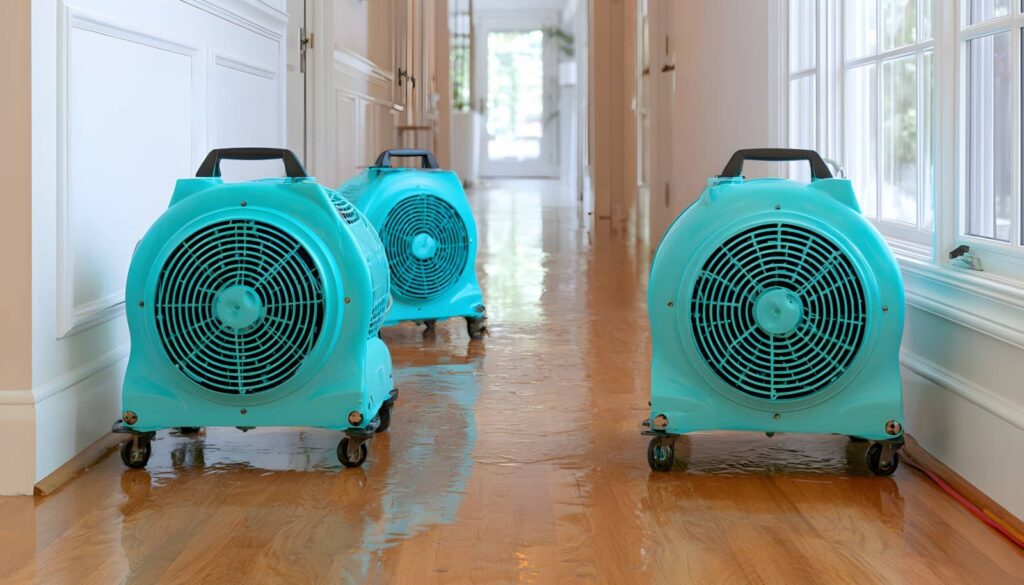
Air movers promote evaporation, dehumidifiers capture water vapor, and containment helps manage affected zones. You document readings, adjust equipment, and confirm progress against baseline and daily data.
This process gives you a clear, compliant path your team can trust together.
Why Is Structural Drying So Important?
Because flood moisture migrates beyond visible wet areas, structural drying is critical to stop secondary damage, control microbial growth conditions, and restore materials to documented drying goals before hidden deterioration compromises the assembly.
You protect your property and everyone who depends on it when you prioritize:
- moisture control within assemblies
- mold prevention through prompt intervention
- preservation of structural integrity
- compliance with drying documentation standards
- reduced risk of odors and material failure
Without proper drying, trapped water can swell wood, weaken gypsum, corrode fasteners, and degrade insulation performance.
You also increase the chance of microbial amplification, which can affect indoor environmental quality and complicate recovery.
When you address hidden moisture early, you support a safer, more stable building envelope and help your community return to normal with confidence and shared assurance.
How Does the Structural Drying Process Work?
Proper structural drying follows a controlled sequence that turns moisture findings into verified drying results.
You begin with a documented moisture assessment to identify affected materials, establish boundaries, and set drying goals that align with industry standards. Next, you remove standing water and isolate impacted zones so conditions stay stable and contamination risks remain controlled.
You then apply targeted drying techniques based on material type, permeability, and moisture load. Throughout the process, you track temperature, humidity, and material readings, then compare them against established baselines.
If progress slows, you adjust the drying plan to restore effective evaporation and moisture migration. You stay compliant by recording each step, confirming when materials reach acceptable dry standards, and ensuring your property returns to the community of safe, serviceable structures.
What Equipment Is Used for Structural Drying?
Several core equipment categories support structural drying, and each serves a defined role in controlling evaporation, dehumidification, airflow, and verification.
You rely on coordinated tools so your drying plan stays controlled, documented, and compliant with material-specific targets and site conditions.
Air movers accelerate surface evaporation across walls, floors, and cavities.
Refrigerant and desiccant dehumidifier types remove airborne moisture under varying conditions.
HEPA air scrubbers help manage particulates during demolition or contaminated loss events.
Injectidry and cavity systems direct airflow into enclosed assemblies and trapped spaces.
Meters, thermo-hygrometers, and infrared cameras support moisture measurement and progress verification.
When you use this equipment together, you create a balanced drying environment, confirm performance with data, and keep your team aligned around consistent restoration standards and documented results.
When Should You Call Structural Drying Experts?
When should you call structural drying experts? You should call them immediately after water intrusion stops and it’s safe to enter.
In structural drying, flood timing directly affects material salvage, microbial risk, and overall restoration cost. If water reaches insulation, subflooring, wall cavities, or structural framing, you need an expert assessment before hidden moisture spreads.
You should also contact specialists when drying extends beyond 24 hours, humidity stays elevated, or odors develop. These indicators suggest trapped moisture and possible secondary damage.
A compliant team will inspect moisture gradients, classify water impact, document conditions, and establish drying targets. That process helps your property return to a verified dry standard.
Frequently Asked Questions
How Much Does Professional Structural Drying Typically Cost?
You’ll typically pay $1,000–$4,000 for professional structural drying, though larger losses can exceed that. Your final price depends on cost factors like moisture extent, equipment runtime, and service comparisons between providers, scope, and response speed.
Will Homeowners Insurance Cover Structural Drying Services?
Yes—why wouldn’t it, if your loss meets policy terms? You’ll often get structural drying covered when insurance policies include sudden water damage, but exclusions, deductibles, and coverage limits determine your final reimbursement and eligibility.
How Long Should I Wait Before Reentering My Home?
You should wait until authorities or restoration professionals confirm reentry safety, typically after electrical, structural, and contamination hazards are cleared. Your drying timeframe may range from 24 hours to several days, depending on damage severity.
Can Structural Drying Prevent Mold From Returning Later?
Mold’s minimization matters: yes, you can reduce recurrence through precise drying techniques and disciplined mold prevention strategies. You remove residual moisture, verify moisture-content targets, and support your home’s compliant, collective recovery with documented environmental control.
How Do I Choose a Reliable Structural Drying Company?
Choose a structural drying company by verifying certifications, insurance, response times, and documented moisture-mapping protocols. You should compare reliable services, review client testimonials, and confirm compliance standards, so you can feel confident you’ve chosen a trusted team.
Final Thoughts
When flooding strikes, you can’t treat hidden moisture like a minor spill. Structural drying experts help you stabilize materials, document conditions, and restore safe moisture levels before secondary damage begins. Think of it like calibrating a critical instrument: one missed reading can compromise the whole system. In many losses, materials can begin deteriorating within 24 to 48 hours. By calling experts early, you improve drying efficiency, support compliance, and protect your building’s structural performance and long-term serviceability.