
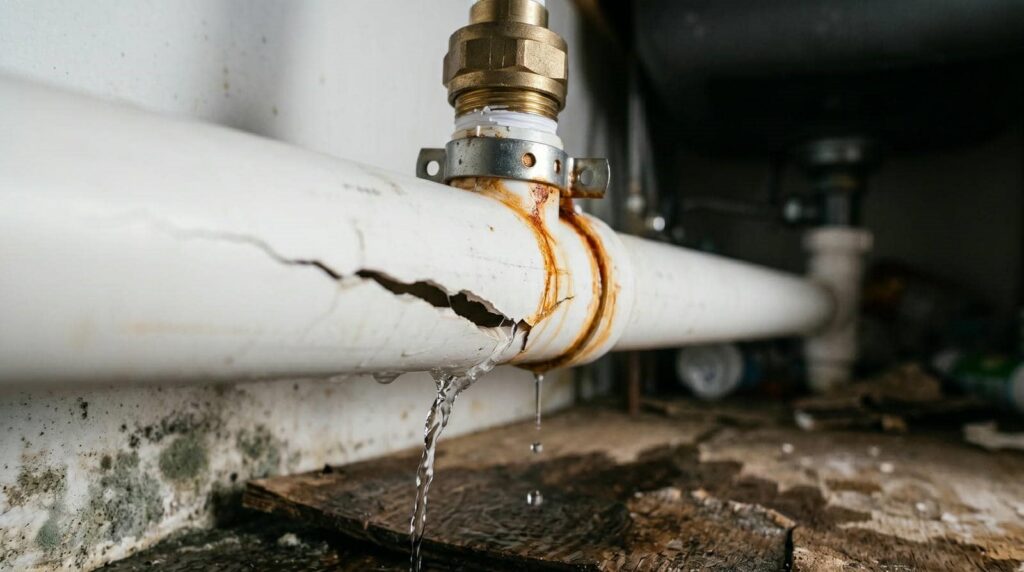
A burst pipe can release chaos, while effective flood cleanup techniques can restore order. When faced with flooding, it’s critical to act swiftly and methodically. You need to understand the steps to mitigate damage and ensure a safe environment. From shutting off the main water valve to employing the right tools, each action plays an essential role. Let’s explore the crucial methods to tackle this unfortunate situation effectively.
Key Takeaways
- Shut off the main water valve immediately to stop further water flow and minimize damage.
- Use a wet/dry vacuum or submersible pump for effective water extraction from the affected area.
- Set up dehumidifiers and fans to promote thorough drying and control humidity levels below 60%.
- Inspect and remove any water-saturated materials like drywall or carpets to prevent mold growth.
- Contact professionals if the water level is significant or if contaminated water is present.
What to Do Immediately After a Pipe Bursts?
When a pipe bursts, acting quickly can prevent further damage to your property. First, shut off the main water valve to stop the flow.
Then, assess the situation and document the damage with photos for your insurance claims. Notify your insurance provider as soon as possible; they’ll guide you through the process and may require these images.
Make temporary repairs if safe, such as using a pipe clamp or duct tape to minimize leaks. This can help reduce damage and show your insurer that you’re taking proactive steps.
Safety Steps to Take Before Cleanup
Before you begin the cleanup process, it’s essential to prioritize safety to protect yourself and others. Start by turning off the electricity in affected areas to prevent electrocution. Always wear protective gear like gloves and masks to guard against contaminants. Make certain to ventilate the space to reduce mold growth, which can exacerbate water damage.
Here’s a quick checklist for your safety:
| Safety Step | Importance |
|---|---|
| Turn off electricity | Prevents electrocution |
| Wear protective gear | Shields from contaminants |
| Ventilate the area | Reduces mold growth |
Being prepared for emergencies ensures you can handle situations effectively. Always remember, your safety comes first!
How to Remove Water and Dry Your Space
Start by evaluating the extent of water damage in your space, as this will guide your removal strategy.
For effective water extraction, use a wet/dry vacuum or a submersible pump to remove standing water. Make sure you wear protective gear during this process.
Once you’ve extracted the bulk of the water, set up drying equipment like dehumidifiers and fans to tackle residual moisture. Position these devices strategically for maximum airflow.
Monitor humidity levels regularly to make certain your space dries thoroughly. Pay special attention to hidden areas, such as behind walls and under flooring, where moisture can linger.
This thorough approach helps restore your space and prepares you for future prevention.
How to Prevent Mold Growth After Flooding
To prevent mold growth after flooding, you must act quickly and decisively. Start by removing standing water and thoroughly drying your space within 24-48 hours.
Use fans and dehumidifiers for effective humidity control, keeping levels below 60%.
Inspect all materials, including drywall and carpets; if they’re soaked, consider discarding them to ensure successful mold prevention.
Clean hard surfaces with a mixture of water and detergent, and don’t forget to address hidden areas like behind appliances.
Regularly check for moisture buildup and maintain proper ventilation, especially in basements and bathrooms.
When to Call Professionals for Flood Help?
Wondering when it’s time to call in professionals for flood help? If you’re facing significant water damage, it’s essential to act swiftly.
Consider calling experts if the water level exceeds a few inches, as standing water can lead to structural issues and mold growth. If you’ve already contacted your insurance company about claims, professionals can help document damages accurately, ensuring you receive adequate coverage.
Additionally, if you’re unsure how to handle contaminated water or if your electrical systems are affected, don’t hesitate to reach out for help. Professionals have the tools and expertise to address these hazards safely, protecting both your home and your wellbeing.
Frequently Asked Questions
Can I Use a Regular Vacuum for Water Removal?
You can’t use a regular vacuum for water removal. Instead, opt for specialized vacuum types designed for wet conditions. Effective water extraction methods involve using wet/dry vacuums to prevent damage and ensure thorough cleanup.
What Items Should I Discard After a Flood?
After a flood, discard items like carpets, upholstery, and paper products. These can harbor mold. Prioritize water extraction and ensure everything’s thoroughly dried to prevent further damage and health risks. Stay safe and proactive!
How Long Does It Take to Fully Dry a Flooded Area?
It typically takes 3 to 7 days to fully dry a flooded area. Using a dehumidifier and ensuring good air circulation accelerates the drying process, helping you restore your space efficiently and effectively.
Will My Homeowner’s Insurance Cover Burst Pipe Damage?
Many homeowners face issues with burst pipes. Your insurance claims depend on your policy coverage; many standard policies include burst pipe damage, but check your details to verify you’re covered adequately.
What Are the Signs of Structural Damage After Flooding?
After flooding, check for sagging ceilings, warped floors, and cracks in walls. These signs indicate compromised structural integrity. Conduct a damage assessment promptly to ensure safety and identify necessary repairs before they worsen.
Final Thoughts
In flood cleanup, swift action is essential to minimize damage. Remember, “a stitch in time saves nine.” By shutting off the main water valve, documenting the situation, and using the right tools to remove water, you can effectively restore your space. Don’t forget to maintain ventilation and monitor for mold growth. If the situation feels overwhelming, don’t hesitate to call in professionals. Taking these steps ensures a safer, cleaner environment after a burst pipe incident.