
Have you ever considered how essential the right equipment is for effective water damage cleanup? Without proper tools, you risk prolonging damage and increasing recovery costs. From pumps to dehumidifiers, each piece of equipment plays a critical role in restoration. Understanding what you need can make all the difference in a successful cleanup. Let’s explore the essential tools that will guarantee you tackle the job efficiently and safely.
Key Takeaways
- Utilize pumps and hoses for efficient large-scale water removal and maneuverability during cleanup.
- Employ dehumidifiers and fans strategically to enhance drying efficiency and control humidity levels.
- Wear protective clothing, gloves, goggles, and masks to safeguard against contaminants and moisture.
- Use cleaning supplies like bleach and vinegar for disinfecting surfaces and neutralizing odors.
- Incorporate moisture meters and thermohygrometers to detect hidden water damage and monitor environmental conditions.
Why You Need the Right Equipment for Water Damage Cleanup
When facing water damage, having the right equipment is vital for effective cleanup and restoration. Using specialized tools guarantees you can quickly address the situation, minimizing further damage and fostering a sense of community in recovery efforts.
Proper equipment helps you tackle mold prevention, which is essential in maintaining a safe environment. By acting swiftly, you not only protect your space but also enhance your insurance coverage claims, as documentation of your proactive measures can support your case.
Essential Tools for Water Extraction
When you’re faced with water damage, having the right tools is vital for effective extraction.
Pumps and hoses are essential for removing large volumes of water quickly, while wet/dry vacuums help tackle smaller areas and residual moisture.
Understanding how to use these tools will streamline your cleanup process and minimize damage.
Pumps and Hoses
When you’re faced with standing water, submersible pumps are your best option for quickly removing large volumes. Their efficient design allows for deep water removal, minimizing damage and facilitating drying.
Pair these pumps with flexible hoses, which enable you to maneuver around obstacles and direct water to your desired disposal location. These hoses are essential for maintaining efficiency and preventing backflow during the extraction process.
Wet/Dry Vacuums
To guarantee longevity and peak performance, follow vacuum maintenance tips like regularly checking filters and hoses for clogs.
Empty the tank promptly after each use to prevent odors and mold growth.
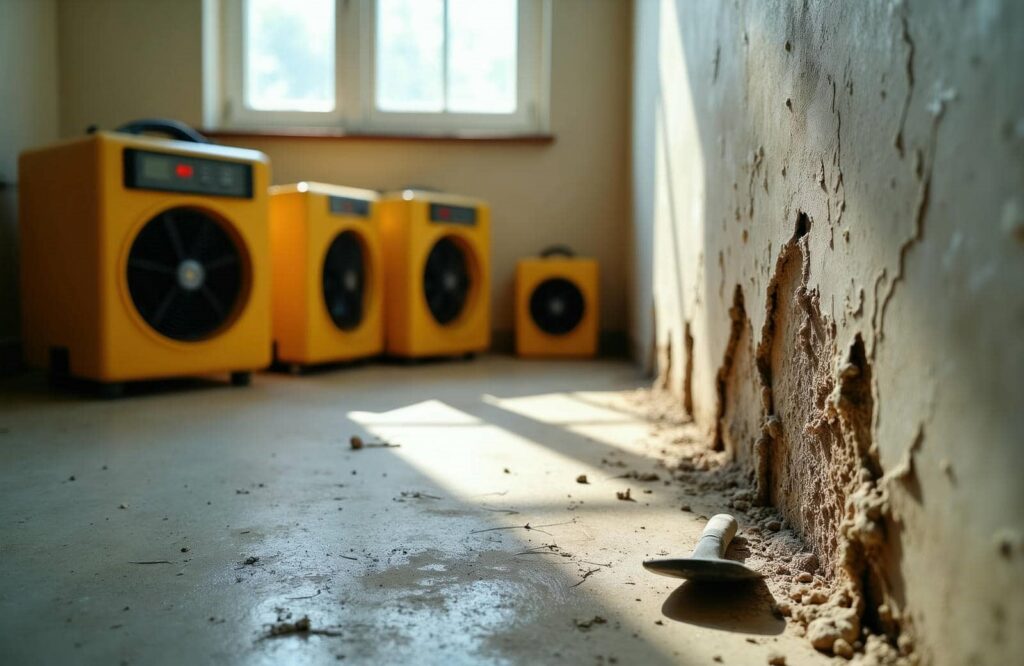
Choose Your Drying Equipment: Dehumidifiers and Fans
Choosing the right drying equipment is essential for effective water damage cleanup, especially when you’re dealing with moisture-laden environments.
To guarantee the best results, consider these key factors for dehumidifier types and fan placement:
Dehumidifier Types: Choose between refrigerant or desiccant models, depending on your environment’s temperature and humidity levels. Refrigerant dehumidifiers work best in warm spaces, while desiccant types excel in cooler areas.
Fan Placement: Position fans strategically to enhance airflow. Direct them toward damp surfaces while maintaining a cross-ventilation setup.
Combination Use: Utilize both dehumidifiers and fans together for maximum efficiency, speeding up the drying process.
What Safety Gear Do You Need for Water Damage Cleanup?
When you tackle water damage cleanup, using the right safety gear is vital.
Essential protective gear includes gloves, goggles, and masks to shield against contaminants.
Additionally, consider the proper footwear and clothing to guarantee safety while working in wet and potentially hazardous environments.
Essential Protective Gear
As you prepare for water damage cleanup, having the right protective gear is essential to ensuring your safety. Equip yourself with the following items to minimize risks during the process:
Protective Clothing: Wear durable, waterproof clothing to shield yourself from contaminants and moisture.
Safety Goggles: Use safety goggles to protect your eyes from debris and harmful substances that may be present in the water.
Gloves: Choose heavy-duty gloves to safeguard your hands from sharp objects and chemicals that could cause injury or irritation.
Respiratory Protection Options
Proper respiratory protection is essential during water damage cleanup to safeguard against harmful airborne contaminants. You should consider using high-quality respiratory masks equipped with HEPA filters to effectively trap dust, mold spores, and other pollutants.
These masks not only provide a tight seal around your face but also make sure that you breathe clean air. When selecting a mask, check for NIOSH certification to guarantee its effectiveness. Additionally, look for masks that are comfortable for extended wear, as cleanup efforts can take time.
If you’re dealing with severe contamination, multi-gas respirators with replaceable air filters may be necessary to protect against chemical vapors. Prioritizing respiratory safety guarantees you can focus on the task at hand without compromising your health.
Footwear and Clothing Considerations
Respiratory protection is just one aspect of safety gear required for effective water damage cleanup.
You also need to take into account appropriate footwear and clothing to guarantee your safety and comfort during the process.
Here are three essential items:
Waterproof boots: These protect your feet from hazardous materials and keep you dry in wet conditions.
Moisture resistant clothing: Wearing this type of clothing helps prevent dampness and reduces the risk of mold exposure.
Gloves: Durable, waterproof gloves provide extra protection against contaminants and sharp objects.
Cleaning Supplies: Chemicals & Sanitizers for Effective Cleanup
When dealing with water damage, selecting the right cleaning supplies, including chemicals and sanitizers, is essential for effective cleanup. The right products enhance chemical effectiveness and guarantee thorough sanitization techniques are employed. Here’s a quick reference table to guide your choices:
| Chemical/Sanitizer | Purpose | Recommended Use |
|---|---|---|
| Bleach | Disinfectant | Hard surfaces |
| Vinegar | Odor neutralizer | Soft furnishings |
| Hydrogen Peroxide | Mold prevention | Affected areas |
Using these supplies properly will help you maintain a safe environment. Always follow the manufacturer’s instructions for best results, and make sure you’re adequately protected while handling these chemicals. Your commitment to proper cleanup reflects your dedication to a healthy living space.
Monitoring Devices: Moisture Meters and Thermohygrometers for Water Damage Prevention
Effective cleanup doesn’t stop at cleaning supplies; monitoring devices play an essential role in water damage prevention.
To guarantee your environment remains safe, consider investing in the following:
Moisture Meters: These tools provide accurate moisture detection, helping you identify hidden water damage in walls and floors.
Thermohygrometers: By measuring temperature and humidity, these devices aid in humidity control, preventing mold growth and further damage.
Data Loggers: These record environmental conditions over time, giving you insights into potential issues before they escalate.
Using these devices not only enhances your cleanup efforts but also fosters a proactive approach to maintaining a healthy living space.
Stay informed and equipped to protect your home from water damage effectively.
Frequently Asked Questions
How Do I Choose Between Renting or Buying Water Damage Equipment?
When choosing between renting and buying water damage equipment, weigh renting advantages like lower upfront costs and flexibility against buying considerations such as long-term savings and frequent use. Assess your project’s scale and frequency to decide effectively.
Can I Use Household Items for Water Damage Cleanup?
Absolutely, you can use household alternatives like towels, mops, and fans as effective tools for water damage cleanup. Just remember, while they help, specialized equipment often guarantees thorough drying and prevents future issues.
What Is the Typical Cost of Professional Water Damage Cleanup?
The typical cost of professional water damage cleanup ranges from $1,500 to $5,000. Cost factors include the extent of damage, location, and necessary equipment. Average prices vary, so it’s wise to get multiple estimates.
How Long Does Water Damage Restoration Usually Take?
Water damage restoration usually takes three to seven days, depending on the severity. Efficient drying techniques greatly affect the restoration timeline, ensuring your space returns to normal quickly and effectively, minimizing disruption to your life.
What Insurance Coverage Do I Need for Water Damage Repairs?
You’ll need a solid water damage policy that covers repairs and replacements. Familiarize yourself with the insurance claim process to guarantee you’re protected, so when disaster strikes, you’re not left adrift in financial uncertainty.
Summary
Having the right equipment for water damage cleanup is essential for a thorough recovery. Did you know that about 14,000 people experience water damage emergencies daily in the U.S.? With the proper tools—like pumps, dehumidifiers, and protective gear—you can effectively mitigate damage and prevent mold growth. Investing in quality monitoring devices helps you stay ahead of hidden moisture issues, ensuring your cleanup process is as efficient and effective as possible. Don’t underestimate the power of being prepared.