
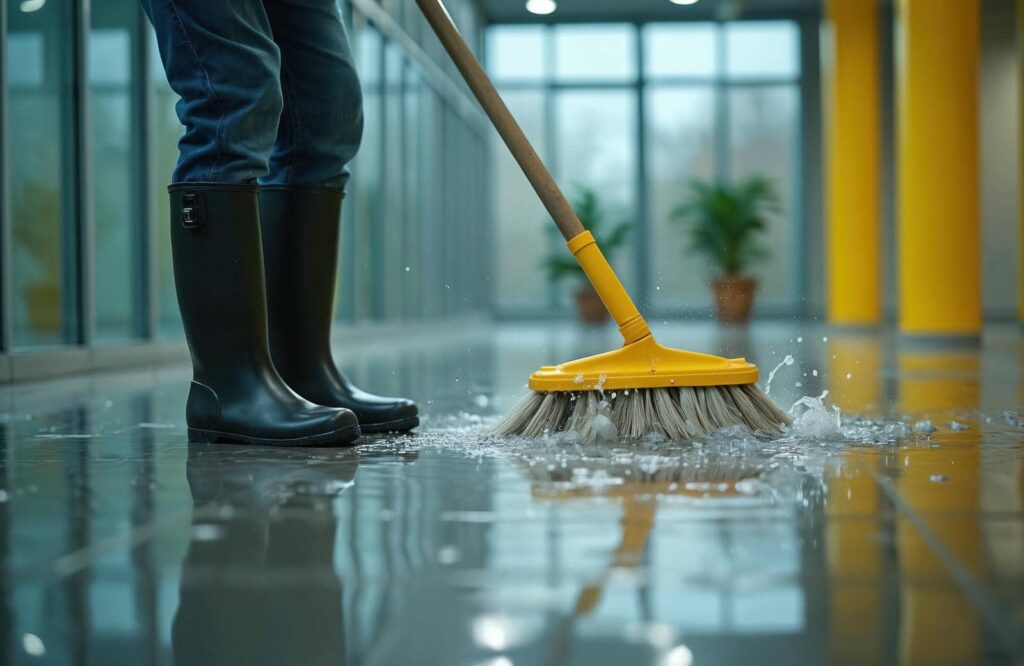
Imagine walking into your office after a heavy rainstorm, only to find water pooling on the floor and damp walls. It’s a situation no business owner wants to face, but understanding how to navigate the complexities of commercial water damage repair is essential. From evaluating the damage to implementing preventive measures, each step plays an important role in restoring your space. Let’s explore how to effectively manage this process and safeguard your investment.
Key Takeaways
- Assess the extent of water damage by identifying visible signs and using moisture detection tools for accurate evaluation.
- Implement immediate water removal steps, including stopping the source, extracting water, and removing damaged materials to prevent mold growth.
- Utilize advanced drying techniques such as industrial-grade dehumidifiers and air movers to expedite the drying process effectively.
- Focus on repairing and restoring affected areas by evaluating structural integrity and addressing mold remediation and surface restoration.
- Take preventive measures by evaluating vulnerabilities, incorporating waterproofing techniques, and educating staff on reporting potential leaks.
Assessing the Extent of Water Damage
When you face water damage in a commercial space, it’s crucial to assess the extent of the damage quickly and accurately. Start your water damage assessment by identifying visible signs, like damp ceilings or warped flooring.
Next, use moisture detection tools to pinpoint hidden water pockets that could lead to mold growth. These tools, such as moisture meters and thermal imaging cameras, help you gauge the severity and spread of the damage.
Document your findings meticulously, noting affected areas and potential sources of the water intrusion. This organized approach aids in repairs and fosters a sense of community among your team, as everyone understands the gravity of the situation.
Communicate your assessment clearly to all stakeholders, ensuring they’re aligned with the next steps. By taking these actions, you’re not just addressing the immediate issue; you’re also protecting the integrity of your commercial space for everyone involved.
Immediate Steps for Water Removal
Swift action is essential in mitigating water damage after an assessment reveals the extent of the issue.
Begin your emergency response by ensuring everyone’s safety. Turn off electricity and gas to prevent hazards. Next, identify the source of the water and stop it if possible.
Once you’ve secured the area, focus on water extraction. Use pumps and wet vacuums to remove standing water quickly. The sooner you act, the less damage you’ll face.
After extraction, remove any damaged materials such as carpets, furniture, or drywall to prevent mold growth. Open windows and doors to enhance airflow and aid in drying.
If the situation feels overwhelming, don’t hesitate to call in professionals who specialize in water damage repair. They’ve the tools and expertise to handle the situation effectively.
Advanced Drying Techniques
After successfully removing standing water and damaged materials, the focus shifts to advanced drying techniques to prevent further issues like mold growth.
You’ll want to employ effective dehumidification methods, such as using industrial-grade dehumidifiers, which pull moisture from the air swiftly. This helps maintain a balanced humidity level, vital for preventing mold.
Incorporating infrared technology can also be a game-changer. Infrared cameras allow you to detect hidden moisture behind walls and under floors, ensuring you don’t miss any damp areas. By pinpointing these trouble spots, you can address them promptly, enhancing your drying efforts.
Additionally, high-velocity air movers can be strategically placed to circulate air and expedite the drying process.
This combination of methods speeds up drying and promotes a healthier environment for your commercial space. Utilizing these advanced techniques ensures that you’re taking all necessary steps for thorough water damage repair.
Repairing and Restoring Affected Areas
Once you’ve tackled the drying process, it’s time to focus on repairing and restoring the affected areas.
Start by evaluating any damage to walls, floors, and ceilings. You’ll want to ensure that the structural integrity of your building is intact. If you notice water-damaged drywall, removing and replacing it is vital to prevent further complications.
Next, prioritize mold remediation. It’s important to eliminate any mold growth, as it can pose health risks and damage your property. Use appropriate cleaning solutions and consult professionals if the infestation is extensive.
Once the mold issue is resolved, patch up any holes and repaint surfaces to restore their appearance.
Don’t forget to check your flooring—carpets may need professional cleaning or replacement.
Preventive Measures for Future Water Damage
To effectively prevent future water damage, it’s essential to implement a proactive maintenance plan for your commercial property.
Start by evaluating your building’s vulnerabilities, focusing on areas prone to leaks or flooding. Incorporate waterproofing techniques such as sealants for foundations and walls to create a barrier against moisture. Regularly inspect and maintain your roofing to ensure it remains intact and free from debris.
Additionally, invest in efficient drainage systems. Ensure gutters and downspouts direct water away from your building’s foundation, and check that storm drains are clear. Establish a routine to monitor for water accumulation around your property, especially after heavy rain.
Educate your staff about reporting leaks or unusual moisture, fostering a culture of vigilance.
Frequently Asked Questions
What Types of Insurance Cover Commercial Water Damage Repairs?
Commercial water damage repairs are typically covered by property insurance policies, including general liability and commercial property insurance. You should check your specific policy details to ensure you’re adequately protected against potential water damage claims.
How Long Does the Water Damage Repair Process Typically Take?
The water damage repair process typically takes a few days to weeks. Your repair timeline depends on various restoration factors, such as the extent of damage, materials involved, and the efficiency of the response team.
Can I Stay in My Building During Repairs?
You can’t stay during repairs; safety precautions are vital. While it may feel like leaving home, a temporary relocation ensures your well-being. Embrace this short journey, knowing your space will soon return, revitalized and safe.
What Are the Long-Term Effects of Water Damage?
Water damage can lead to mold growth and compromise your building’s structural integrity. You might face health risks, costly repairs, and decreased property value if you don’t address the issue promptly and effectively. Stay vigilant!
How Can I Choose a Reliable Water Damage Restoration Company?
People rely on customer reviews to choose service providers. Look for companies with strong reviews. This ensures you receive trustworthy help when facing water damage challenges.
Recap
Steering through commercial water damage repair is like steering a ship through a storm; careful assessment and swift action can lead you safely to calmer waters. By understanding the extent of the damage, acting quickly, implementing advanced drying techniques, and making necessary repairs, you can restore your space and prevent future issues. Keep this guide handy, and you’ll be well-equipped to tackle any water-related challenges that come your way. Stay proactive, and your property will thank you!