
Flood cleanup can feel like battling a tidal wave with a teaspoon. However, you don’t need to drain your wallet to tackle the mess. Simple, inexpensive tools can make a significant difference in your recovery efforts. From budget-friendly pumps to essential mops, there are practical solutions that can help you reclaim your space. Curious about what tools can empower your cleanup process? Let’s explore the essentials that won’t break the bank.
Key Takeaways
- Budget pumps efficiently remove standing water and are essential for initial flood cleanup efforts.
- Wet/dry vacuums are versatile tools for sucking up water from various surfaces.
- Mops, buckets, and sturdy squeegees aid in drying and clearing smaller areas after flooding.
- Rakes and brooms help collect debris and mud, making cleanup more manageable.
- Use heavy-duty trash bags for effective waste disposal of damaged materials and debris.
Essential Safety Gear for Flood Cleanup
When tackling flood cleanup, having the right safety gear is essential to protect yourself from potential hazards. Start with sturdy rubber boots to keep your feet dry and shielded from sharp objects.
Wear gloves to prevent cuts and infections from contaminated water. A mask is important, too; it’ll help filter out harmful particles and mold spores in the air. Don’t forget protective eyewear to shield your eyes from debris and splashes.
It’s easy to overlook these essentials, but they’re critical for your safety and well-being.
Affordable Cleaning Supplies for Flooded Homes
When your home floods, knowing what cleaning supplies you need can make the recovery process smoother.
You’ll want to focus on budget-friendly tools and DIY methods that won’t break the bank.
Let’s explore a list of essential cleaning supplies to help you get back on your feet.
Essential Cleaning Supplies List
After a flood, having the right cleaning supplies on hand can make all the difference in restoring your home efficiently. You’ll want to focus on effective cleaning strategies and supply organization to tackle the mess. Here’s a list of essential supplies to take into account:
| Cleaning Supply | Purpose | Estimated Cost |
|---|---|---|
| Broom | Remove debris | $10 |
| Mop | Clean surfaces | $15 |
| Disinfectant wipes | Sanitize areas | $5 |
Budget-Friendly Tools Options
Flood cleanup can be overwhelming, but having budget-friendly tools makes the process manageable.
Start with basic budget tools like heavy-duty trash bags, which are perfect for collecting debris. A simple push broom and a mop are essential for clearing out dirt and water from floors. For more stubborn stains, consider a bucket and some affordable cleaning solutions.
Don’t forget gloves to protect your hands while you work. Also, a basic wet/dry vacuum can be a lifesaver for sucking up excess water.
By using these budget-friendly tools and effective cleanup strategies, you’ll not only save money but also feel empowered to tackle the mess.
DIY Flood Cleanup Methods
Tackling the aftermath of a flood can feel overwhelming, but using DIY methods with affordable cleaning supplies can simplify the process.
You’ll not only save money but also regain control over your space. Here are some essential items to help with flood debris removal and water damage assessment:
Trash Bags: Perfect for collecting debris and damaged items.
Rubber Gloves: Protect your hands while cleaning up hazardous materials.
Baking Soda: Great for deodorizing and absorbing moisture.
Mops and Buckets: Essential for removing excess water and cleaning floors.
With these tools, you can effectively tackle the mess.
Remember, you’re not alone in this; many have faced similar challenges and come out stronger.
Stay safe and take it one step at a time!
Top Budget-Friendly Tools for Water Extraction
When dealing with water extraction, having the right tools can make all the difference in how quickly and effectively you recover from a flood.
Start with budget pumps, which are essential for efficient water removal methods. These affordable options can help you clear standing water without breaking the bank.
A wet/dry vacuum is another must-have; it’s versatile and perfect for sucking up water from carpets or hard surfaces.
Don’t forget about mops and buckets, which are simple yet effective tools for smaller areas.
Finally, consider investing in a sturdy squeegee to push water out of spaces.
Using these budget-friendly tools not only saves money but also empowers you to take control during a challenging time.
Essential Restoration Tools for Effective Flood Cleanup
After you’ve managed the initial water extraction, the next phase is restoration, which requires a different set of tools.
Effective flood recovery hinges on the right equipment, so having these essentials can make a real difference:
Dehumidifier: Helps remove moisture from the air, speeding up drying.
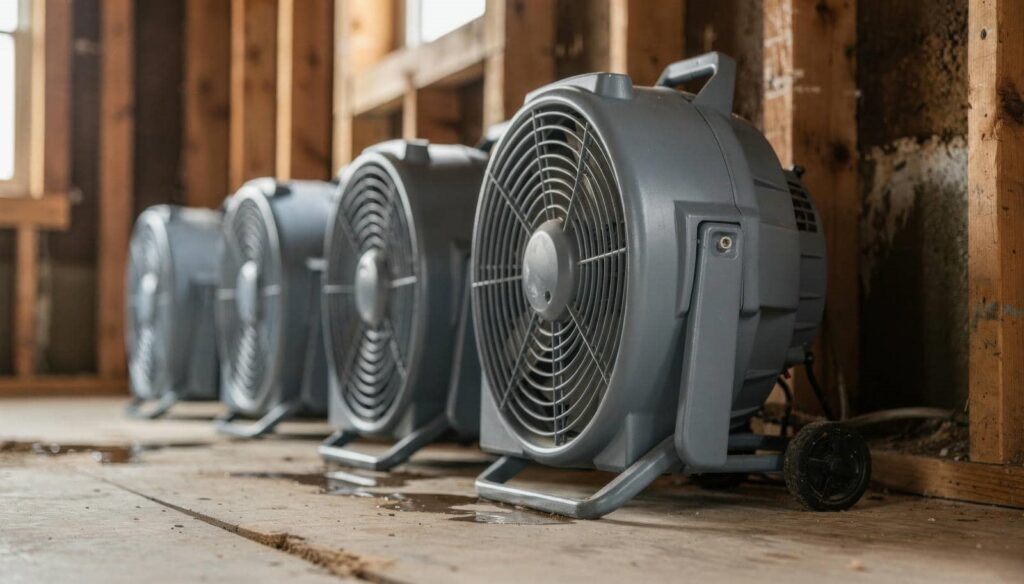
Air Mover: Circulates air to assist in drying surfaces and floors.
Wet/Dry Vacuum: Perfect for sucking up water from carpets and hard-to-reach areas.
Protective Gear: Think gloves and masks to keep you safe from contaminants.
Using these restoration techniques not only aids in recovery but also fosters a sense of community as you tackle the cleanup together.
You’re not alone in this journey; we’re all in it together.
Mold Prevention Gear for Post-Flood Recovery
After a flood, preventing mold is vital for your health and home.
You’ll need essential gear like masks and gloves, along with effective cleaning solutions to tackle any dampness.
Let’s explore the best tools that can help you stay safe while restoring your space.
Essential Mold Prevention Gear
How can you effectively prevent mold growth after a flood? Taking proactive steps is essential for safeguarding your home and health.
Here are some essential mold prevention tools to take into account:
Mold Resistant Materials: Use these when repairing or rebuilding. They can greatly reduce mold growth.
Humidity Control Devices: Dehumidifiers help keep moisture levels low, making it harder for mold to thrive.
Air Purifiers: Invest in HEPA filters to trap mold spores and improve indoor air quality.
Protective Gear: Wear masks and gloves while cleaning to protect yourself from mold exposure.
Effective Cleaning Solutions
When floodwaters recede, the urgency to clean and restore your home can’t be overstated. To tackle mold and other contaminants, consider using eco-friendly cleaners that are effective and safe for your family.
Homemade solutions, like a mix of vinegar and baking soda, can help eliminate odors and disinfect surfaces without harsh chemicals.
Gather essential supplies like spray bottles, scrub brushes, and rags to make the process smoother. As you clean, remember to ventilate your space, allowing fresh air to circulate.
With these practical tips, you can create a healthier environment for yourself and your loved ones. Together, you’ll not only restore your home but also foster a sense of belonging as you rebuild your haven.
Cost-Effective Storage Solutions for Cleanup Supplies
While it’s easy to overlook storage, having a smart organization system for your flood cleanup supplies can make all the difference when disaster strikes.
Here are some cost-effective storage solutions to evaluate:
Weatherproof Containers: Protect your supplies from moisture and damage.
Stackable Boxes: Save space and keep items organized for quick access.
Supply Caddies: Easily transport essential tools from one area to another.
Mobile Carts: Move your cleanup supplies wherever you need them.
Don’t forget to use organizational labels and a labeling system to keep everything in its place.
Portable shelving can also maximize your storage efficiency.
DIY Techniques for Efficient Flood Cleanup
With your cleanup supplies organized and ready, it’s time to put them to use. Start with a thorough water damage assessment to identify affected areas. This will help you prioritize your efforts.
For flood debris removal, use a sturdy shovel and garbage bags to clear away the mess efficiently. If you have access to a wet/dry vacuum, it’s invaluable for extracting standing water. Don’t forget to wear gloves and masks to protect yourself from contaminants.
While cleaning, consider enlisting friends or family; tackling this together fosters a sense of community. Finally, document the damage for insurance purposes.
Frequently Asked Questions
How Can I Safely Handle Flooded Electrical Appliances?
To safely handle flooded electrical appliances, prioritize safety precautions. Unplug them, inspect for damage, and consult a professional if unsure. Remember, it’s okay to ask for help; you’re not alone in this situation.
What Should I Do if My Home Has Structural Damage?
When your home’s like a wounded bird, first call a professional for a structural assessment. Then, prioritize emergency repairs to guarantee safety. Don’t hesitate; reaching out for help shows strength and community spirit. You’ve got this!
How Can I Dispose of Contaminated Materials?
To dispose of contaminated waste, contact local waste management for proper disposal methods. They’ll guide you on safe handling and collection. Remember, you’re not alone in this; communities often support each other during tough times.
Are There Any Volunteer Organizations for Flood Cleanup Assistance?
Sure, you could just sit back while your community floods away, but why not engage in volunteer opportunities? Local organizations offer community resources to help—join in, make a difference, and feel that sense of belonging.
How Long Should I Wait Before Returning Home After a Flood?
Wait at least 24 to 48 hours after flood duration before returning home. Always prioritize safety precautions—check for hazards, listen to local authorities, and guarantee your home’s stability. Your well-being matters most during this stressful time.
To Sum Up
In flood cleanup, having the right tools can make a huge difference. Did you know that using wet/dry vacuums can remove up to 99% of standing water? By investing in budget-friendly supplies like pumps, mops, and sturdy trash bags, you’re not just saving money—you’re taking control of your recovery. Remember, every small step counts, and with a little effort and the right gear, you can restore your home and peace of mind without breaking the bank.